Property tax appraisals

Travis County Appraisal District will soon send out property tax notices, but you don’t have to wait on the mail.

To get a head start, find out how much tax you will owe by searching for your property at the Travis County website.

You also can see more details about a property and see a history of past appraisal values at the Travis County Appraisal District site.

Posted in Taxes, Travis County | Leave a comment

Review city’s plans for East Riverside Corridor

The City of Austin is holding an open house Oct. 27 to discuss the draft of the East Riverside Corridor Regulating Plan. The ERC plan is available for review online and at the Ruiz Branch Library, 1600 Grove Blvd., starting Monday.

The plan will guide the development of transportation in the area, and the city is implementing a transportation study to identify short-, medium- and long-term improvements that would improve safety and improve mobility and accessibility for vehicles, bicycles and pedestrians.

East Riverside is considered a gateway for visitors arriving at the airport, and the city has long expressed interest in creating a more appealing boulevard with a mix of businesses, residences and public transportation, possibly involving light rail.

Read the plan and come to the open house to give your input and help shape the future of our neighboring district. See a flier for the event, in English and Spanish, here.

Open house
ERC Regulating Plan/city transportation study
5-8 p.m. Thursday, Oct. 27
Travis High School cafeteria, 1211 E. Oltorf St.

City contact: Erica Leak, Senior Planner, City of Austin Planning & Development Review Dept., 512.974.2856, erica.leak@austintexas.gov

Posted in City projects, Meetings, Transportation | Tagged | Leave a comment

Meeting on Mabel Davis dog park, Norwood Park update

Mabel Davis Park is among several Austin parks being considered as the site of a future dog park, a fenced area where dogs would be allowed to play off-leash.

As part of the planning process, the Austin Parks & Recreation Department is having a series of community input meetings to allow neighborhood residents and other stakeholders to communicate with city officials. The first was held June 27 at Linder Elementary, and the next will be in early November. See a city news release about the meeting here.

Dog park meeting
6 to 7:30 p.m. Monday, Nov. 7
Tim Cheathem Building, 4411-A Meinardus Lane
East of I-35, near the intersection with East St. Elmo Road.

If you are unable to attend the meeting but want to give feedback, contact the project coordinator, D’Anne Williams, at MabelDavisParkOffLeashArea@ci.austin.tx.us.

In a story that ran in the Austin American-Statesman in April, city officials said that contenders for new dog parks include Mabel Davis Park, Bartholomew District Park in Northeast Austin, Guerrero Colorado River Park in Southeast Austin, Allen Park in Northwest Austin and Yett Creek Park in Northwest Austin.

One group with a lot of input in this process is the Off-Leash Area Advisory Committee, or OLAAC, a panel of community volunteers that meets the second Wednesday of each  month at City Hall. The group advocates ‘public and sustainable recreation for off-leash dogs and their humans, through partnerships and volunteers, education, fund-raising, identifying prospective OLA sites and providing Austin Parks and Recreation Department with advice and counsel on new and existing OLAs.’ Keeping up with their meetings is a good way to learn about the possible future of dog parks in Austin. See agendas and minutes from past meetings here.

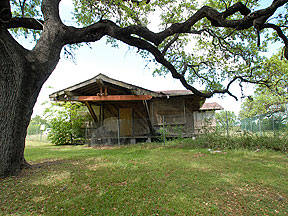
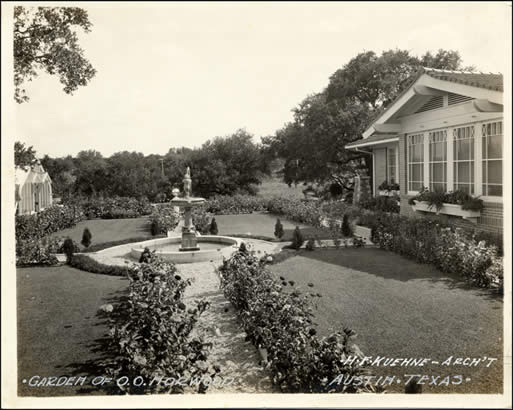
The city had considered closing the dog park at Norwood Park, at Riverside Drive and I-35, but KVUE reported on Oct. 12 that the city will keep that dog park open and will finally restore the historic Norwood House nearby. Learn more about the Norwood dog park from the Austin Parks Foundation. And find out about the city’s feasibility study on the restoration of the Norwood House, once part of a beautiful estate built in 1922.

Norwood House

The Norwood Estate was built in 1922 on a bluff near Travis Heights overlooking the Colorado River and downtown Austin. It was the home of O.O. Norwood, the developer behind historic Norwood Tower, once the tallest building in Austin. (Austin History Center photo.)

The Norwood House as it appears now. (Downtownaustinblog.com photo)

Posted in City projects, Meetings, Off-leash areas, Parks and recreation, Pets | Tagged , , | Leave a comment

Large brush collection and other tree news

The city will pick up large brush and limbs next week. Have items at the curb by 6:30 a.m. Oct. 3 (though pickup might take a few days), and observe these city rules:

  • Stack unbound brush no more than 4 feet high and in one row less than 15 feet along the curb.
  • Place the cut ends toward the curb.
  • Brush must be at least 5 feet away from your garbage cart or other obstacle.
  • Cut trunks that are 3 to 8 inches in diameter to lengths no longer than 6 feet.
  • Cut trunks that are over 8 inches in diameter to lengths no longer than 3 feet.

Do not:

  • Set out bulky items, bamboo or any vegetation with thorns;
  • Block your mailbox or cover your water meter;
  • Stack or lean brush against a fence, telephone connection box or under low-hanging limbs or wires.

A word about oak wilt: Fall is a risky time to prune oak trees. Oak wilt is a lethal fungal disease that is spread by nitidulid beetles, which are attracted to fresh wounds on trees, such as cuts or broken limbs. It is also spread by roots to nearby oaks. Oak wilt is active very close to our neighborhood, and has devastated trees in parts of Travis Heights. That means oaks in our neighborhood are at risk of being exposed to the disease.

To be safe, only prune oaks in the hottest summer months and the coldest winter months, and cover wounds immediately with tree paint. To learn more, consult an arborist or go to the website of the Texas Oak Wilt Information Partnership.

City tree trimming: Austin will cut back its tree trimming budget for 2011-12, even though trees are drought-stressed and experts believe that trees falling on power lines might have caused Bastrop’s 35,000-acre wildfire. See the Sept. 26 Statesman story here.


Posted in City projects, Garden & landscape | Leave a comment

October 2011 police forum and National Night Out

The next Police Commander’s Forum for Region III will be 6:30 to 8 p.m. Monday, Oct. 3, at 812 Springdale Road. Come meet Officer Ray Lopez, our neighborhood’s district representative, and learn about recent crime statistics and policing strategies. For a list of district reps and other contacts in our district, check out the Region III website.

Officer Lopez will also stop by our neighborhood the following night for National Night Out, a display of neighborhood spirit and crime prevention awareness. Turn on your porch lights, lock your doors and come outside to spend time getting to know your neighbors from 6:30 to 9 p.m.

Burleson Heights will have a gathering at the north end of Ware Road, in the 2400 block, and Officer Lopez will stop by at some point in the evening to meet with residents and answer questions. Bring insect repellent and lawn chairs.

Find more details about National Night Out here.

Posted in Safety, Security | Leave a comment

Lessons from the Labor Day fires

The hottest summer on record, an exceptional drought and dry winds have combined to create dangerous conditions and a high risk for wildfire in Central Texas. By the end of the past week, fires had killed two people and destroyed almost 1,400 homes in and around Austin. Most of the homes lost are in the Bastrop area, where fire has consumed about 35,000 acres. But the drought has put the entire state at risk: Since the current fire season began in November 2010, about 3.6 million acres have burned in Texas, destroying homes in Oak Hill, Fort Davis, Possum Kingdom and many other communities. (If you’re having trouble visualizing how big 3.6 million acres is, see maps comparing that with U.S. metropolitan areas at this blog from The Atlantic.)

And the fires aren’t out yet. See locations of active fires from the Texas Forest Service and Weather Underground.

Our neighborhood is blessed with large trees and surrounded with greenspace that create a sense of peace and isolation for us and a home for wildlife. But they also create a fire risk, especially when conditions are this dry. Take a look at what surrounds Burleson Heights and Burleson-Parker.

Burleson Hieghts (red) and Burleson-Parker (gold) neighborhoods are surrounded with tree-filled areas, many of which have dense undergrowth and dead wood that can create a fire hazard. Copyright CAPCOG, U.S. Geological Survey, USDA Farm Service Agency. From Google.

Dead trees and branches, tall weeds and dense undergrowth are a wildfire risk. Much of the property surrounding our neighborhood is not maintained by absentee owners.

If you follow this blog’s Twitter feed @HurlyBurlyATX , you’ve seen lots of advice this week for how to stay informed and keep wildfires from damaging your home. (Not a Twitter user? You can still read posts online or see the five most recent posts at the lower right corner of this page.) Here’s a roundup of some of the best information from agencies and news sources that circulated this week.

Firewise planning
A home within one mile of a natural area is within the “ember zone,” in which burning embers can be carried by winds. To protect your home, create a “defensible space” to keep combustible materials a safe distance away: Trim tree canopies to at least 10 feet from your home, clean rain gutters, remove low-growing vegetation that allows fire to spread to trees, cut grass to a maximum height of 4 inches, store wood piles away from your house, and be aware that wood decks and fences can allow fire to reach your house. See a virtual model of a firewise landscape, and learn more about creating one at a free online course from the National Fire Protection Association’s nonprofit Firewise Communities program.

The San Antonio Express-News ran a good story on how prescribed, controlled fires that were done in the past in some areas burned off combustible materials and kept last week’s wildfires from being even worse. Go to page two of the story for a very good graphic on defensible space/landscape planning.

Make sure all vents at your house are covered with 1/8-inch or smaller metal mesh, and choose masonry siding (such as stone or HardiePlank) and fire-resistant roofing (such as metal) when you build or remodel. Make sure your chimney is at least 10 feet away from tree canopies, and cover it with 1/4-inch or smaller metal mesh. Have several long garden hoses accessible around your home at all times. See more excellent advice in a PDF of the Texas Forest Service’s wildfire-ready brochure.

Firewise planning works. In July, a community on Hamilton Pool Road that had integrated firewise strategies into its design was spared during a 400-acre wildfire. Read a newspaper story about the fire around the Belvedere subdivision.

Even individual homeowners can make a difference. See a list of other firewise resources, especially for landscaping, here. There might even be grants available to help cover the cost for private property owners.

Keep informed
You can sign up to receive telephone or text message alerts about evacuations and emergencies in your area from the Emergency Notification System of the 10-county Capital Area Council of Governments. Get alerts affecting your home, office, school and other locations that you specify when you register. 

When in doubt, get out
Having an evacuation plan can save your life, your pets and your most important possessions and documents when you have no other options in a fire, flood or other disaster. 
Learn how to create an evacuation plan and kit from Ready.gov or the city’s office of Homeland Security and Emergency Management.

Road closures
Wildfires have closed Texas 71 and other major roads around Austin. To find a path to safety, check on road conditions or see a map of construction and closures, see the Texas Department of Transportation road conditions site or call (800) 452-9292.

A natural way to clear land
Goats eat the brush and weeds that fuel wildfires. They’ve been used extensively in hillside neighborhoods in the West, where they can remove combustible plants on terrain that’s too difficult for people to reach. They even eat kudzu, a vine that has choked out native trees and plants in the South.

Some goat farmers hire out their herds to cities and neighborhoods. It would require a property owner’s permission, but it might be one way to control the dense undergrowth that creates a fire risk and conceals homeless camps and illegal activity around our neighborhood.

Read more in this PDF from a joint program of the U.S. Forest Service and other agencies.

Share ideas
Have more tips? Share them in our neighborhood Google Groups, in comments in this blog or via the contact form.

Posted in Fire prevention, Safety | Leave a comment

Concrete work wrapping up

After a few weeks of peace and quiet, construction crews returned last week and this week to replace two more driveway aprons in Burleson Heights and dozens of feet of curbs. A third location on Catalina also had old concrete replaced.

That’s almost the last of the street/drainage/water project in our neighborhood. The contractor has completed everything on its punch list, items that were identified during an inspection by engineers and city staffers last month. Just a fraction of the original budget for the project was left, which covered the cost of the repairs for some last sections of concrete that were deemed to be damaged or that were causing cars to scrape on their driveways.

All that remains of the project is the installation of one last section of storm drain at the bottom of the hill on Ware Road. The city is still negotiating to acquire land for an easement that will allow it to install 78 feet of pipe, which will allow the new storm drain installed under Ware Road to drain directly into Country Club Creek.

Owned by the California-based company that owns Douglas Landing Apartments, the property had several liens on it, and a few still remain. If necessary, the city will condemn the property to gain the easement, but for now it is waiting until the liens are cleared.

Once the city can create an easement, the work to install the remaining storm drain section is expected to take just a couple of days, says Rick Colbrunn, project manager in the Public Works Dept.

At that point the entire project will be considered accepted by the city (possibly back-dated to this week or next), and the project will go into a one-year warranty period during which the contractor will be responsible for any past damage to private property or flaws that become evident. So hold onto the contact information below in case you see any repairs needed to your property or the street.

Creek project
It still hasn’t rained! Revegetation along the banks of the creek near our neighborhood can’t begin until moisture is available for plants, so Public Works is still in a holding pattern. More info to come.

Contact info
Colbrunn is our city contact, but if you have damage to personal property, you should go through the contractor and file a claim.

Rick Colbrunn, city’s project manager
City of Austin Public Works
rick.colbrunn@ci.austin.tx.us
974-7089

Dale Deeten, contractor’s project manager
Aaron Concrete
Dale@aaronconcrete.com
926-7326, ext. 307

Posted in City projects | Tagged | Leave a comment

Austin’s native landscapes in the New York Times

Austin’s record heat and drought are making the news, and so are the restored prairies and native landscaping that are holding up in these harsh conditions.

Read about the people, the plants and the techniques at the Lady Bird Johnson Wildflower Center, the Mueller development, in green roofs and home landscapes in an article that appeared in today’s New York Times.

Posted in Conservation, Garden & landscape, Media | Leave a comment

Public meeting with Lloyd Doggett on Saturday

U.S. Rep. Lloyd Doggett will hold Neighborhood Office Hours from 9:30 to 10:30 a.m. Saturday in the H-E-B parking lot at 2701 E. Seventh St., right after a ribbon-cutting ceremony to reopen East Seventh, which has been under construction since the beginning of the year.

The congressman plans to talk about education, Social Security, Medicare and more. He also has an online survey where you can give your opinion about priorities for Congress. You can visit his website here.

The former state senator and Texas Supreme Court Justice has been a congressman since 1995. He currently represents our district, U.S. House District 25, but there are plans to redraw that district and add another. He might end up in a race in a new district, District 35, proposed as a long, skinny tract that would extend from Southeast Austin to San Antonio.

Posted in Politics | Leave a comment

Get the most out of your water

Starting Sept. 6, Austin will enter Stage 2 Mandatory Watering Restrictions in an attempt to ensure that enough water is available during the ongoing drought. City Manger Marc Ott made the move last week because of low combined storage levels at Lake Buchanan and Lake Travis, which are only 45 percent full.

How this affects you:

  • Lawn watering will be allowed only once a week (odd numbered addresses on Saturday, even numbered addresses on Sunday), before 10 a.m. and after 7 p.m.
  • Hand watering allowed any time.
  • You can wash your car only before 10 a.m. on your designated watering day, and there can be no charity car washes.
  • No automatic filling of ponds or pools allowed.
  • No outdoor fountains allowed unless it provides aeration for aquatic life.
  • Water may not be served in restaurants unless it’s requested.

Here are some tips to get the most out of your water for your landscape.

Soaker  hoses vs. sprinklers: When water is sprayed into the hot, dry air, a lot of it is lost to evaporation. Sprinklers are the most effective way to water lawns, but for trees, foundation areas and garden beds, use a soaker hose or drip irrigation system, and only on your designated watering day.

Mulch and compost: Organic matter helps soils retain water, adds nutrients and feeds the microbes that keep plants healthy. Covering the soil with a few inches of mulch also prevents weeds. But organic matter breaks down and has to be replenished, so as often as once a year, add more compost to your trees and garden beds. Top that with mulch such as shredded hardwood or pine needles until the bare soil is covered by a total of at least 3 inches.

In the fall, top the lawn with about 1/4 to 1/2 inch of a fine compost like Dillo Dirt, made locally from yard clippings and treated sewage. (Yes, it’s safe, though some recommend using it on a lawn but not in the veggie or herb gardens.)

Compost and mulch are inexpensive, especially if you can buy in bulk. But it’s also easy to make your own compost from yard trimmings and kitchen scraps like vegetable peels, and the city even has a rebate. Read more about how to compost here.

Trees: Don’t let your trees get too stressed or they’ll become vulnerable to diseases. Cover the soil from the trunk to the drip line (a ring under the outer edge of the branches) with 3 to 4 inches of mulch, making sure to pull it away from the trunk by a few inches to prevent rot and insect damage. Good mulch options are compost, shredded hardwood or a combination. The best way to water is with a soaker hose along the drip line. Avoid watering close to the trunk of mature trees, but for young trees, you can use something like a Tree Gator, a sack filled with water that slowly releases into the soil.

Lawns: You only need to water 1 inch per week. Watering deeply and infrequently will force roots to grow deeper, protecting the plant when the top of the soil dries out. But when water can’t soak in effectively, it will pool and run off, wasting water while the deeper soil stays dry. That’s an even bigger problem on a slope.

Give the ground time to absorb the water using the “cycle and soak” method, which forces water deeper. Using a shallow container like an empty tuna can, figure out how many minutes it takes to water 1 inch. Divide that time by three; water three times, each for a third of the minutes, giving the area about an hour to absorb before watering there again. For example, if it takes 60 minutes to water 1 inch, water for 20 minutes at a time, moving the sprinkler to other areas for the interim, then repeat the process twice. Automated sprinkler systems make this easier, but if you use a hose-end sprinkler, think of it as your weekly exercise.

There are many water-thrifty alternatives to a lawn, but if you want turf grass, consider Bermuda, Zoysia or buffalo grasses. Only use St. Augustine, the thirstiest grass, in shady areas where other grasses won’t grow. When you mow, use a mulching blade set to a height of 3 inches in the summer to shade the soil, recycle the nutrients in clippings and prevent evaporation.

Have less lawn, use less water: Landscaping with native and well-adapted plants will use much less water than sod. The city offers rebates for residents who convert part of their lawn to an area that doesn’t need to be irrigated, such as gravel paths and patios or garden beds planted with natives. Learn about good plant options from the City’s Grow Green program or the Lady Bird Johnson Wildflower Center’s Native Plant Database.

Foundations: Southeast Austin is notorious for its clay soil, which expands when wet and shrinks when dry — sometimes by several inches. Make sure the soil around your foundation is kept evenly moist to prevent shifting and cracking. Soaker hoses are effective when set about 2 feet away from a slab, at least 5 feet away from pier & beam (watering too much or too close to P&B foundations will cause the piers to tilt).

To shade the soil and prevent evaporation, mulch and plant garden beds around the foundation. Set plants about 2 to 5 feet away from the building to give them room to grow and have good air flow. Avoid large plants near entrances and windows, where they can conceal criminal activity.

Collect rainwater: It seems hard to believe, but it will rain again. Low-tech rain barrels and cisterns allow you to save that water and use it when you most need it. Learn the basics in this PDF from the Austin Energy Green Building program, which has links to more resources.

For barrels, I like the Moby, which holds 65 gallons and has a removable lid for easy cleaning, a big overflow for heavy downpours, a fine mesh screen to keep mosquitoes away, and up to two spigots. I hear that some of the best prices on large polyethylene tanks are at the website Plastic Mart. It’s based in Burnet, so you can get one even cheaper if you pick it up rather than have it delivered.

And save money while you’re saving rainwater with a rebate from the city. A very good, large-capacity home system can be had for about $2,000 to $5,000 total, and the city will reimburse you for half the cost of the materials.

So until it does rain, here’s hoping these tips help you save water, save money and save your valuable plants and structures.

Posted in Conservation, Garden & landscape | Leave a comment