Burglary video gets attention of KEYE

KEYE’s 10 p.m. news broadcast tonight will feature a live report and video of a recent burglary in Burleson Heights.

Two surveillance cameras captured video of a man and a vehicle involved in a burglary just after 4 p.m. on July 12. The green SUV has a brush guard on the front and a long cargo area, and is seen driving past the home twice before stopping nearby. An accomplice then drives it up to the house while the burglar breaks in.

Edited to show the highlights, the video is a revealing look at how criminals cruise through neighborhoods and knock on doors as they target a home for a burglary.

Although Burleson Heights typically has a low burglary rate, it has not been immune to property crime that has been on the increase throughout Southeast Austin neighborhoods this summer.

Residents have been taking an active role in preventing and reporting crime, and this is the third incident in two weeks in which residents videotaped or photographed criminal activity or an attempt:

  • One resident prevented a crime by circling the block and returning to check on suspicious activity, taking a photo of the blue Toyota pickup involved (Texas license plates 69B-KV6, tinted windows, white bed cover and after-market rims), and quickly reporting the incident to police and neighbors. A man and woman who had approached a house quickly got back in the truck and left when they saw that they were being watched.
  • Another resident caught video of two young men entering a vehicle in the driveway, part of a nightlong spree that resulted in the theft of several power tools, GPS systems and two cars, most of which were recovered within hours.
  • A neighbor in the film industry edited and posted video of the July 12 burglary on YouTube, and a group of writers and translators created bilingual posters featuring stills from the video to ecourage tips to police and warn criminals that they’re being watched in the neighborhood.

You can make a difference, too. Take a second look any time you see anything suspicious, and call 911 to report it. Use our message boards to quickly share information with your neighbors.

If you’re considering a surveillance system for your home, watch a July 17 KXAN report on homeowners using motion-activated wildlife cameras as an inexpensive and portable alternative to video surveillance.

And if you recognize the vehicle or person in this video, please notify police by calling 911 or 311. Callers can remain anonymous.

Watch the KEYE report here.

UPDATE: Thanks in large part to the homeowners’ video, a suspect was arrested about 2 1/2 months after the segment aired on KEYE.

Posted in Media, Police, Safety, Security, Wildlife | Tagged | Leave a comment

Westbound Oltorf will be closed July 21-28

A construction project will close a portion of Oltorf Street to westbound traffic for one week beginning on Saturday.

From July 21-28, all westbound lanes of Oltorf will be closed between Interstate 35 and Congress Avenue, and only one eastbound lane will be open.

The intersections of Oltorf with Rebel Road and with Alta Vista Avenue also will be closed that week, and the intersection of Oltorf and Eastside Drive will be closed intermittently. Evening and weekend work is possible.

Traffic is being detoured onto Woodward Street.

The project is designed to replace water and sewer lines along Oltorf and install a stormwater drainage system near Blunn Creek. It began in May 2011 and was expected to end in July 2012, but has now been extended until early 2013 in order to make improvements to Blunn Creek and install another storm drain line, according to an announcement from the reconstruction team. Most of the work is expected to be complete in winter 2012.

Learn more from an Austin American-Statesman article by Ben Wear.

Project Manager: Richard Duane, City of Austin Public Works Dept., (512) 974-7730, Richard.Duane@austintexas.gov

Construction Inspector: Lupe Gomez, (512) 974-2812, Guadalupe.Gomez@austintexas.gov

Westbound Oltorf Street will be closed July 21-28. Image from City of Austin. (Click to enlarge.)

Posted in City projects, Construction, Traffic, Transportation | Leave a comment

Mabel Davis Park issue is front-page news

Today’s Austin American-Statesman has an article on page A1 about neighborhood reaction to a 1.6-acre fenced off-leash area (OLA) that has been proposed for Mabel Davis Park.

Sarah Coppola’s article, Planned off-leash park runs afoul of neighbors, cites the need for dog parks in a city with a growing number of apartments and condos, but also represents concerns the park’s neighbors have about water quality, heavy use, adequate maintenance and environmental issues at Mabel Davis, the site of a former landfill that was contaminated with pesticides and heavy metals. 

Here is a timeline of events in the proposed OLA’s history, with links to blogs that discussed those events and other dog park issues:

  • June 27, 2011: Austin Parks and Recreation Department (PARD) held its first public meeting at Linder Elementary to discuss the proposed OLA.
  • Nov. 7, 2011:  An open house on the OLA was held at an Austin Street and Bridge Division facility near St. Elmo Road and Interstate 35. Visitors could read information on easels around the room, and could talk individually with representatives of PARD, other city departments and the Off-Leash Area Advisory Committee (OLAAC).
  • Feb. 28, 2012: Austin Parks and Recreation Board approved new OLAs at Mabel Davis Park and Yett Creek Park with no board discussion or citizen input regarding the OLA at Mabel Davis.
  • April 5, 2012: Citing inadequate neighborhood consensus on the issue, Austin City Council passed a resolution that requires Council approval of OLAs or other uses at Mabel Davis and Yett Creek parks.
  • April 10, 2012: PARD staff met with residents to discuss the proposed OLA.
  • May 24, 2012: PARD staff held a follow-up meeting with neighborhood representatives. 

Austin Parks and Recreation Department will hold a final public meeting about the proposed park at 6 p.m. Aug. 29 at Travis High School, according to theStatesman article.

Posted in City projects, History, Media, Meetings, Off-leash areas, Parks and recreation, Pets | Tagged , , , | Leave a comment

Fireworks safety for the Fourth of July

For many people, it wouldn’t be the Fourth of July without fireworks. But there are strict limits on fireworks inside the city limits and in Travis County parks, and our region is once again experiencing a drought, increasing the risk of fire. The Travis County Fire Marshal just issued a burn ban on June 26, and you can keep an eye on our current drought status at the U.S. Drought Monitor.

For a really big bang, check out the Austin Symphony concert and fireworks display at 8:30 p.m. Wednesday at Auditorium Shores. Fireworks will begin at about 9:30 p.m. The hill near the Main Building at St. Edward’s University is one of the best places in our area to watch the show, especially if you bring a radio to listen to the concert on 98.9 FM.

If you want to see big fireworks, check out a public display like the municipal fireworks show and Austin Symphony concert on Auditorium Shores.

If you must use fireworks at home, please be safe and use only the varieties allowed within the city limits without a permit. Here’s a list from the Austin Fire Department.

Snake, glowworm: Pressed pyrotechnic pellet that produces a large, snakelike ash upon burning. These devices may not contain mercuric thiocyanate.

Smoke device:  Pyrotechnic tube or sphere that, upon ignition, produces white or colored smoke.

Wire sparkler: Wire coated with pyrotechnic composition that produces  a shower of sparks upon ignition. These items may not contain magnesium.

Trick noisemakers:

  • Party popper: Pulling a string on this small paper or plastic item shoots out paper streams and makes a small report (explosive noise).
  • Booby trap: Small tube with string protruding from both ends similar to a party popper. Pulling the ends of the string makes a small report.
  • Snapper: Small, paper-wrapped item containing coated sand. When dropped, the device explodes, producing a small report.
  • Trick match: Kitchen or book match that has been coated with a small quantity of explosive or pyrotechnic composition. When lighted, it produces a small report or a shower of sparks.
  • Cigarette load: Small wooden peg that has been coated with a small quantity of explosive or pyrotechnic composition. Upon ignition, a small report or a shower of sparks is produced.
  • Auto burglar alarm: A tube that produces a loud whistle, a small report and/or smoke when ignited with a squib.

Call 311 to report a nonemergency fireworks violation. Call 911 to report emergencies such as fires and crimes.

Have a happy and safe Independence Day!

Posted in Fire prevention, Parks and recreation, Police, Safety, Travis County | Leave a comment

Neighborhood calendar for July

So far July is shaping up as a quiet month with a few important events. Coming up are the monthly Police Commander’s Forum, the Independence Day fireworks display on Auditorium Shores, a possible Planning Commission hearing on the Carlson Drive issue, and runoff elections.

Two other issues might inspire neighborhood meetings:

  • Some residents are interested in creating a neighborhood association for Burleson-Parker, possibly one that encompasses a large area and includes representation for smaller, adjacent neighborhoods such as Burleson Heights. Burleson Heights already has a neighborhood association, but a larger group could have a bigger presence in city issues, share resources and minimize duplicated efforts.
  • In May, a group of residents had a followup meeting with representatives from the Austin Parks and Recreation Department (PARD) to talk about the off-leash area (OLA) proposed for Mabel Davis Park. The OLA was approved by the Austin Parks & Recreation Board in February, but in April, City Council overturned the approval and voted that changes to the way the park is used require Council approval. PARD is reorganizing its efforts, and is likely to hold a public meeting in August to take up the issue again. Residents in the Mabel Davis Park area are considering a neighborhood meeting to discuss the plans and propose some alternatives for PARD.

If there’s an event you think should be included in the neighborhod calendar, please use the Contact Form to submit your idea.

Posted in Calendar, Elections, Fire prevention, Meetings, Off-leash areas, Parks and recreation, Pets, Police, Politics | Leave a comment

Carlson Drive hearing postponed until late July

The Planning Commission hearing on Edgewick condominiums’ request to gate Carlson Drive has been postponed again until July 24. Wendy Rhoades of the City of Austin Planning and Development Review Department, the case manager, says the case had most recently been scheduled for a hearing on June 26, but city staff requested a postponement to give the city and the applicant more time to investigate.

Carlson Drive is a private road and the property of the Edgewick development, but it is also one of only three east-west streets that allow public access  from Parker Lane to points east in the 1.3-mile stretch between Oltorf Streeet and Ben White Boulevard. Rhoades says there are three proposed alternatives that would preserve some connectivity:

  • Carlson could be converted from a private road to a public street, remaining ungated;
  • Edgewick could gate Carlson during limited evening hours, allowing public access during the day; or
  • A trail could be built north of Carlson Drive that would allow bike and pedestrian acccess to Capital Metro buses, Linder Elementary and several neighborhoods even if Carlson were gated.

The city’s preferred option would be the first proposal, making Carlson a public street  and keeping it open to public drivers, cyclists and pedestrians. Rhoades says there is some support for that plan among Shire’s Court (the community’s developers) and Edgewick’s small number of homeowners, who would no longer have to bear the cost of maintaining the well-used road. The community is conducting a pavement study to find out whether the private road was built to standards required by public streets, which must support higher traffic and heavy vehicles such as emergency vehicles and buses.

Edgewick is just west of Linder Elementary School. Construction there halted for a long time after the builder’s Florida-based parent company filed for bankruptcy during the mortgage crisis in 2008, the year the first homes were sold. The cost of building and maintaining infrastructure such as Carlson Drive (with traffic circle, north of the fenced homes) is borne by the developer and the unfinished community’s few dozen homeowners. They might support allowing Carlson to become a public street. Photo from Google.

For those of you not keeping count, this is the sixth hearing date that has been penciled in since late February. The postponements reflect the time required for the city and developers to look at options or compromises that can satisfy the owners, at least in part, while avoiding the loss of connectivity where it is badly needed — near a 50-acre district park, elementary school, transit routes and thousands of homes.

Edgewick originally requested permission to gate Carlson Drive because it claimed that public access contributed to crime in the neighborhood. However, Edgewick is gated and fenced, and the public using Carlson does not have access to the developed part of the community unless gates or fencing are open or damaged. Since the Jan. 6 request, there have been only four incidents of crime in Edgewick or on Carlson, according to the Austin Police Department’s Crime Report Viewer: One night with a cluster of seven car burglaries in February, one report of leaving the scene of an accident in February, one criminal mischief report in March, and one disturbance at a residence in April. By comparison, 94 crimes were reported just outside Edgewick during the same period.

Before the request, only two property crimes affecting residents were reported in 2011 and nine in 2010, the earliest data available from Viewer.

The search area for APD Crime Viewer statistics is within a 1,000-foot radius of the 2900 block of Bond Drive. Bounded by Carlson Drive, Pither Lane, Wickshire Lane and Saville Loop, Edgewick makes up about 50% of the search area, but has had only 12% of the total crime and 18% of the total property crime since Jan. 6. Edgewick had only 3% of the property crime in the area in 2010. Some 2010 data is no longer available. (Click to enlarge.)

You can see maps and photos of Carlson Drive and its only two alternatives (Glen Springs Way and Wickshire Lane) in a Feb. 10 blog. Visit the Planning Commission website for meeting agendas, or see updates and hearing postponements by using the city’s AMANDA system and entering the case number for the Carlson Drive case,  C14-04-0181.SH(RCA).

Rhoades says citizens can still submit their comments to the Planning Commission by e-mailing her. You can reach her at wendy.rhoades@austintexas.gov or 974-7719.

Posted in City projects, Development, Security, Transportation | Tagged , , , , | Leave a comment

Watch for fawns during spring

Burleson Heights added two new residents this spring: Fawns born in the yards along Princeton Drive!

Perhaps not surprisingly, one yard that has been hosting a new white-tailed deer family is a certified wildlife habitat. But even if the National Wildlife Federation hadn’t given the yard its stamp of approval, the doe has, choosing the native landscaping as her hiding place for her young one.

Because we’re on the edge of a creek and greenbelt, wildlife often share our neighborhood and might show up when and where their human neighbors don’t expect them. Here is some advice from the staff of the Austin Nature Center and from a homeowner who has hosted a fawn in her yard.

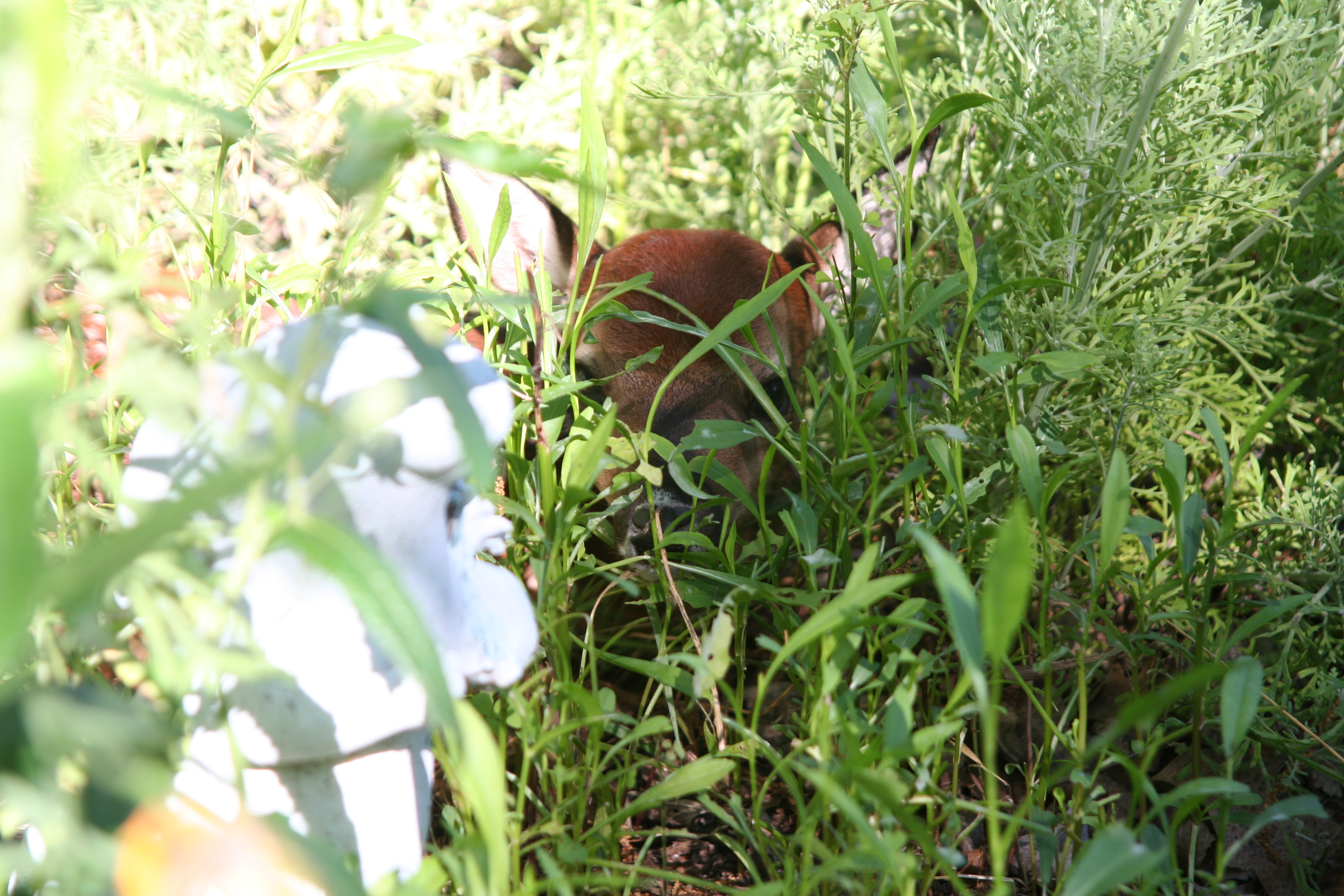
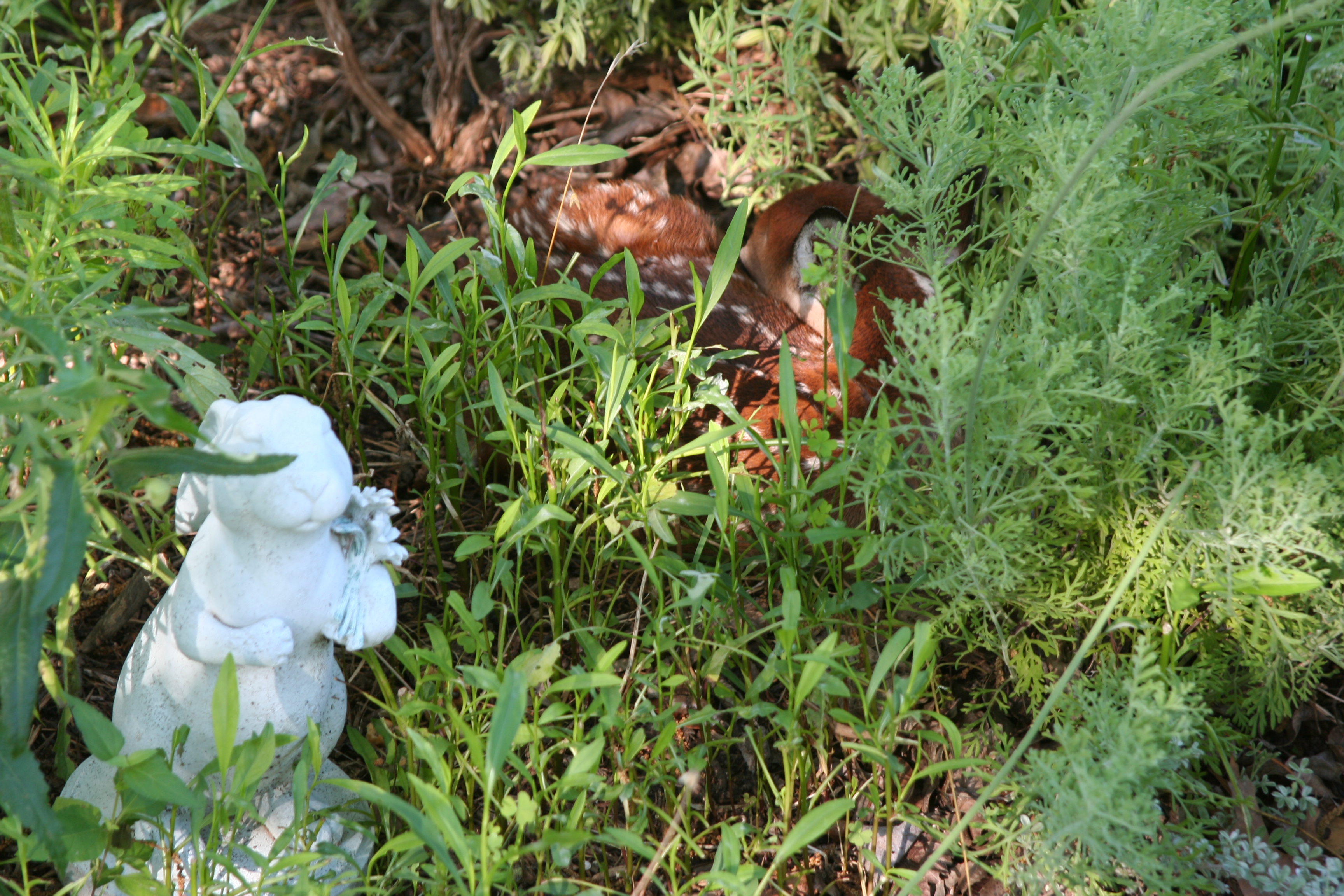
A fawn was barely as big as an ornamental bunny in one yard on Princeton Drive when it was a few days old. It hid in tall landscape plants each day while its mother went in search of food and rest.

Spring into life

Central Texas deer often bear twins, and typically have their young in early May through late June, sometimes before a storm or other change in the weather. When a doe is ready to give birth, she will seek an open area where she can watch for predators. It also will be near a source of food for herself, because the tiny fawn will not be able to travel for several days.  

As soon as a fawn is born, the mother encourages it to stand and move to a hiding space.  She then cleans the area to remove anything with a scent that could attract predators. She also will clean up after the fawn regularly for weeks to come. 

Mother and fawn remain in the birth area for several days to a week, spending portions of the nights together, then separating during the day while the mother goes off to feed and the fawn stays and hides.

Baby deer are born without a scent that could attract predators, and instinctively freeze when surprised. Their stillness and spotted brown coat make them almost impossible to find while hiding. And surprisingly, it is the fawn, not the mom, that finds the hiding place. Becase mom’s scent can attract predators, when the fawn is not nursing, it finds a brushy area, then hunkers down.

Fawns that call our neighborhood home are hard to see, so please be cautious when you are gardening or mowing during springtime.

Fawns are well-camouflaged and instinctively stay still while they are hiding.

Avoid temptation to intervene

If you find a fawn, it is probably hiding, not lost or ophaned. Human interference can cause it to leave its hiding place, and because it does not have a scent, its mother cannot follow a trail to find it again. A mother that does not find her fawn in a day or two will assume it has died and will leave, so fawns that have been mistakenly removed by humans should be returned quickly.  

A fawn doesn’t necessarily bond immediately with its mother. It can be confused by human intervention or might bond with a human it thinks is its mother.  Though cute at first, this means that it will miss important training it needs to survive in the wild. It might end up spending its life in captivity, being killed by predators or put down by authorities. And deer that lose their fear of humans are dangerous, especially during the fall breeding season, when bucks become aggressive and can attack humans they view as competitors.

Please do not feed deer or fawns. Doing so is a misdemeanor under Austin’s deer feeding ordinance, and you don’t need to feed them anyway. Does give birth where they can find ample plants to eat, and the only food that a baby needs is its mother’s milk. 

Feeding urban deer increases birth rates, reduces their fear of humans and increases the chance of ill-fated encounters with pets, people and traffic. Corn lacks adequate protein, especially for a nursing mother, and any supplemental feed will encourage her to linger when the safest place for her and her fawn is in the woods.

Extra food also attracts animals that could find and attack a fawn, such as dogs, raccoons and coyotes. (Coyotes were most recently seen during the drought in late 2010, when at least two traveled along Country Club Creek into Burleson Heights. They made the rounds at about 9 a.m. for weeks, seeking pet food left outside by residents and killing several outdoor cats.)

After a few weeks, the fawn will start to travel with its mother and adopt a natural diet of leaves, stems and acorns, possibly in your yard. You can protect your landscape (to a degree) by choosing deer-resistant plants, by spraying with a deer repellent such as Liquid Fence or by using other deer deterrents.

When to get involved

It might be time to intervene if you find a fawn that is crying, is covered with fire ants, has swollen eyes or has visible wounds. Contact a local rescue and rehabilitation expert, a game warden or the Texas Parks and Wildlife Department Wildlife Information Line (1-800-792-1112).  Learn more about when to call in a rehabilitation expert.

For more information on deer, visit these websites from Texas Parks and Wildlife Department and Deer Options Enterprise.

Living with urban deer

• Don’t feed the deer.

• Don’t get close to the deer and fawn, and don’t disturb or try to touch a healthy or sleeping fawn.

• If you observe a fawn, skip the yard work and mowing for a week or so. Stay out of the area until the deer family moves on.

• If a baby deer starts to follow you, try to head it back under a bush and encourage it to lie down.  Eventually, instinct should take over, and the fawn will stay still until its real mom gets home.

• Keep dogs on a leash.  It is not in a dog’s instinct to “play” with a fawn.  If a dog stumbles upon a fawn or sees one moving, it will be up to you to prevent a catastrophe. 

Coexisting with urban wildlife has its challenges and its joys. Observe and enjoy the deer, learn about their natural habits and keep a respectful distance for the safety of you both. Happy wildlife watching!

Posted in Garden & landscape, Wildlife | 3 Comments

Austin heading for an epic flea season

If there’s one good thing you can say about the record-setting drought in 2011, it’s that we didn’t have a flea problem.

How times change. After a warm, wet winter, the fleas are back in force, making wildlife, pets and their people miserable. Fleas also spread diseases and parasites, such as typhusbubonic plague and tapeworms.

Fleas thrive in humidity above 50 percent and temperatures below 95 percent. Sounds like right now, doesn’t it? And fleas beget other fleas — fast. An adult can live for a year, survive a few months without a meal, and can lay thousands of eggs. Immature fleas can develop into adults within two weeks or can wait up to eight months, until the conditions are just right. Unfortunately, the conditions indoors usually make the grade.

Fleas are developing a resistance to some insecticides and to topical treatments such as Frontline, previously among the most effective controls. They also have a complex life cycle — from egg to larva to pupa to adult — and killing adults will not keep new ones from developing.

Controlling fleas requires treating your home, your yard and your pet simultaneously. A combination of short- and long-term solutions takes frequent cleaning and maintenance, but will get you and your pets through the warm-weather flea season healthy and relatively itch-free. 

Indoors

A graduate student in entomology once told me that wearing long white socks not only protects you from bites, but also traps fleas in the fabric when they leap up looking for a meal. The dark fleas are conspicuous in the white fabric, so it’s a good way to count them and find out whether you have a flea problem indoors or out.

Then again, Fido has probably already let you know. Flea bites are extremely irritating, and both people and pets can develop hypersensitivities and allergies to fleas.

The first step is to remove as many adult and immature fleas as possible. Give your pet a bath, and follow up by cleaning house. Vacuum your floors, then dispose of the vacuum cleaner bag. Wash pet bedding regularly in hot water.

The next step is to kill adult fleas. Choose pest control products that are toxic to fleas, but not to your pets, your children or you. Be careful even with plant-based insecticides such as pyrethrum/pyrethrins (and their synthetic imitators, pyrethroids, such as permethrin) and the citrus extracts limonene and linalool. Botanical insecticides are natural, can effectively kill fleas and are relatively safe, but can cause a reaction in sensitive animals, especially cats.

For long-term control, you have to keep immature fleas from turning into biting, egg-laying adults. For that, use insect growth regulators (IGRs), substances that interfere with insects’ ability to develop from one life stage to the next. They are low in toxicity because they aren’t insecticides. They don’t even kill fleas, so you’ll need to use them in combination with other products. Examples are sprays containing methoprene (brand name Precor) and pyriproxyfen (Nylar). Methoprene breaks down in sunlight and can only be used indoors.  IGRs are extremely effective and work for several months.

Whenever you treat your home, play it safe and temporarily remove your pets and kids. Open the windows and air out the house before letting them return.

A nontoxic option is flea traps, sticky traps that attract fleas at night with a small light.

Outdoors

Now would be a good time to treat your yard with beneficial nematodes. These microscopic worms feast on insects that spend part of their life cycle in the soil, including fleas, June bugs and roaches. Apply with a watering can or hose-end sprayer when the ground is moist, such as after a rain, and water in briefly. You can find beneficial nematodes at plant nurseries specializing in organic products, such as the Great Outdoors and the Natural Gardener. They’re sold alive but dormant, usually suspended in vermiculite or a sponge, and must be kept refrigerated before use. Bring an insulated lunch bag and an ice pack for the trip home, and use within a couple of weeks.

Sprinkling your yard with diatomaceous earth will also help control fleas and other insects. This white powder is made from ground-up rock containing the fossils of diatoms. It is a fine abrasive that scratches the exoskeletons of insects, drying them out and killing them. Protect your lungs when applying this stuff.

The IGR pyriproxyfen can also be used outdoors. It’s sold under the names Archer and Nylar, and can be applied to areas outdoors where pets spend a lot of time, such as shady spots under shrubs and decks.

Pets

Remove fleas and flea dirt (digested blood that looks like black pepper in the pet’s fur or bedding) with baths and periodic combing with a fine-toothed flea comb. If you find a flea, drop it into soapy water to kill it.

Traditional treatments such as brewer’s yeast, garlic and cedar chips are not very effective, if at all. Instead, give your pet baths and use spot-on treaments, pills or sprays during flea season.

Remember that cats are more sensitive to chemicals than dogs, but cats are also the primary hosts for fleas. In fact, the fleas you’re seeing are almost always cat fleas (Ctenocephalides felis).

If you let your cats outdoors, you owe it not just to your pet but also to your neighbors to use a flea treatment, because otherwise Fluffy is carrying fleas from yard to yard as she wanders, sabotaging the control efforts of the nice people next door. To a lesser degree, wildlife and rodents, including squirrels, also introduce fleas. Fleas from rodents are less common, but more likely to carry diseases. Cat fleas commonly harbor tapeworms (learn what to watch for here).

You can protect your pets to some degree with topical treatments such as Frontline Plus, Advantage and Revolution, which can last for one to three months. Some repel insects, others kill them on contact, and there are formulas available over the counter and by prescription. Drs. Foster and Smith, a mail-order service owned by veterinarians, has a comparison chart of the flea products it sells.

Pills include ProgramSentinel, Capstar and Comfortis. The active ingredient in Comfortis, spinosad, is also available in the pill Trifexis, which for a few dollars more also prevents heartworms. (Heartworms are spread by mosquitoes, and dogs and cats in Central Texas should take monthly heartworm preventives year-round.)

Flea-preventive pills require a prescription from a veterinarian. They work best in combination with other treatments, because your pet will constantly come into contact with new fleas introduced by outdoor cats or wildlife.

Consult your veterinarian about the safest, most effective treatments. You can also learn more from Texas AgriLife Extension’s information sheets on flea control  and safe options. California’s Integrated Pest Management Program also has good management tips.

Posted in Garden & landscape, Pets | Tagged | 3 Comments

Dog found in Mabel Davis Park

A pug mix followed a resident home from Mabel Davis Park on Wednesday. Do you know this sweet guy?

A friendly unneutered male dog has been wandering near Mabel Davis Park for two weeks. He has a black collar, but no tags.

If you know this dog or the owner, use the contact form to provide your name and how to reach you, and you’ll be contacted by the family taking care of him.

There has been a recent increase in the number of loose dogs in Burleson Heights and Burleson-Parker neighborhoods, and one pet dog attacked and injured a pedestrian in April. Please be aware that in Travis County, a dog must be on a leash at all times unless it’s secured on its owner’s property or is in a designated off-leash area in a park. Tethering a dog in a yard is against the law in Austin. Learn more about City of Austin pet ordinances and the Travis County leash law.

Dogs face an uncertain and often short future on the streets. Some of the biggest dangers are heartworms, predators and cars, but even if a loose dog is impounded and taken to the “safety” of an animal shelter, it won’t survive long if it isn’t claimed. This guy is lucky to have a temporary caretaker, because Austin’s brand-new, $12 million animal shelter is already over capacity and had to end its hard-earned “no-kill” status when it euthanized 17 animals last week. Read more in a May 14 Austin American-Statesman article.

Please think of the safety of your pet and your neighbors, and keep your dog on a leash or in your house or fenced yard.

And if you’re a responsible dog lover, you might be able to give this dog a safe and loving home if its owner isn’t found.

Posted in Parks and recreation, Pets, Safety, Travis County | 2 Comments

Urban rail plan would reach more parts of city

A proposed urban rail system would have another 10 miles of track and reach into more parts of the city under a plan offered by city transportation planners.

The original plan proposed electric-powered rail on 16.5 miles of track from the Mueller development to downtown Austin, then east to Austin-Bergstrom International Airport through one of two routes, one of which would be on East Riverside Drive.

The new plan would extend the track to the southern end of South Congress Avenue, the western end of Riverside Drive, west to MoPac (Loop 1) near West Fifth and West 35th streets, and north to U.S. 183. It would bring riders to St. Edward’s University, Southpark Meadows, Long Center for the Performing Arts, the Triangle development, the Seaholm development, Seton Medical Center and other destinations. And it would connect with the MetroRail Crestview and Hancock stations, providing a more extensive rail network.

If approved, rail would one day provide access from our area to downtown offices, three hospitals, two universities, two performing arts centers, the airport, and suburbs from far South Austin to Leander. Once built, rail corridors tend to attract even more services and businesses. Chicago, Dallas and even East Austin are good examples of that.

Rail would also cost money, but so do roads, car insurance, bike lanes, sidewalks and other transportation-related necessities. The current projected cost of $1.3 billion is in the same ballpark as the Texas 130 toll road from Georgetown to South Austin, which has done little to take cars and trucks off Central Austin roads. A $150 million to $250 million rail bond proposal is being considered to cover the first phase of the new rail network. Also proposed is a new $100 million bridge across Lady Bird Lake reserved for trains, buses, bicycles and pedestrians. That bridge would be built near Waller Creek, which is being revitalized from the lake to the University of Texas.

A route that reaches more parts of the city and serves more residents is more likely to get voter support if a rail proposal goes before the city in the November bond election. Urban rail is also a major component of the city’s vision for the future of the East Riverside Corridor, which is undergoing a redevelopment plan.

See an Austin American-Statesman article and map describing the proposed route.

Posted in City projects, Development, Elections, Media, Taxes, Transportation | Leave a comment